

Heat absorption
A large collective droplet surface area supports rapid heat transfer and cooling around the flame and hot surfaces.
Vintex supports project-specific water mist solutions for suitable industrial, commercial, institutional and special-hazard applications, including design coordination, supply, installation, testing and commissioning.
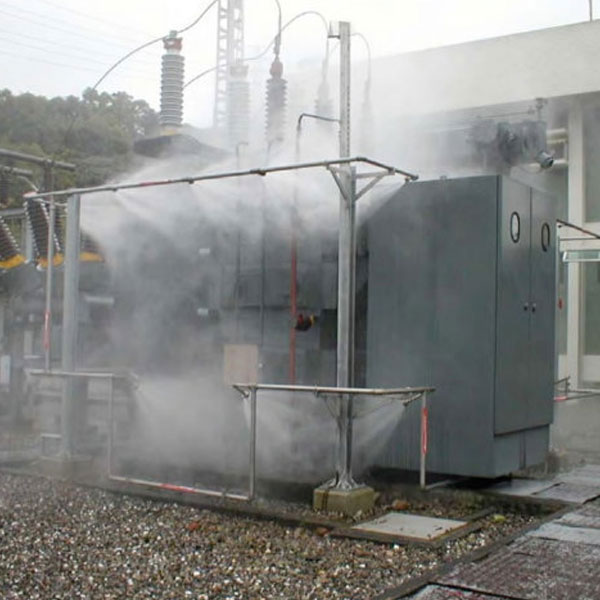
A water mist system is a water-based fire protection system that produces very fine sprays through engineered nozzles. The small droplets can control, suppress or extinguish a suitable fire by absorbing heat, turning to water vapour, reducing radiant heat and limiting fire spread.
Water mist is not a universal replacement for sprinklers or gaseous suppression. Performance depends on the fire hazard, enclosure, ventilation, nozzle characteristics, operating pressure, water supply and the system's tested or approved application. A project-specific technical review is essential.
The contribution of each mechanism varies with the hazard and system design.
A large collective droplet surface area supports rapid heat transfer and cooling around the flame and hot surfaces.
As droplets absorb heat, part of the water converts to vapour and can contribute to localized oxygen displacement.
Suspended droplets can attenuate radiant heat, helping reduce heat transfer to nearby materials and equipment.
Where droplets reach surrounding combustibles, wetting can help resist ignition and limit fire spread.
Each application requires confirmation against the selected system's tested scope, manufacturer design manual and project approval requirements.
The final package depends on whether the solution is pump-driven, cylinder-based, local application or total compartment protection.
Vintex accepts enquiries across all 28 states and 8 union territories, subject to technical suitability, project scope, site conditions and logistics.
Visakhapatnam, Vijayawada, Guntur, Tirupati, Nellore, Kurnool, Rajahmundry and Kakinada.
Itanagar, Naharlagun, Pasighat, Tawang, Ziro and Bomdila.
Guwahati, Dibrugarh, Silchar, Jorhat, Tezpur, Tinsukia and Nagaon.
Patna, Gaya, Muzaffarpur, Bhagalpur, Darbhanga, Purnia and Bihar Sharif.
Raipur, Bhilai, Durg, Bilaspur, Korba, Raigarh and Jagdalpur.
Panaji, Margao, Vasco da Gama, Mapusa and Ponda.
Ahmedabad, Surat, Vadodara, Rajkot, Gandhinagar, Bharuch, Vapi, Jamnagar and Bhavnagar.
Gurugram, Faridabad, Panipat, Sonipat, Ambala, Karnal, Hisar and Manesar.
Shimla, Dharamshala, Solan, Baddi, Mandi, Kullu and Una.
Ranchi, Jamshedpur, Dhanbad, Bokaro, Deoghar and Hazaribagh.
Bengaluru, Mysuru, Mangaluru, Hubballi-Dharwad, Belagavi, Ballari, Tumakuru and Davanagere.
Thiruvananthapuram, Kochi, Kozhikode, Thrissur, Kollam, Kannur, Alappuzha and Palakkad.
Indore, Bhopal, Jabalpur, Gwalior, Ujjain, Sagar, Satna and Dewas.
Mumbai, Thane, Navi Mumbai, Pune, Nagpur, Nashik, Chhatrapati Sambhajinagar, Kolhapur, Solapur, Palghar and Raigad.
Imphal, Thoubal, Bishnupur and Churachandpur.
Shillong, Tura, Jowai and Nongpoh.
Aizawl, Lunglei, Champhai and Kolasib.
Dimapur, Kohima, Mokokchung and Wokha.
Bhubaneswar, Cuttack, Rourkela, Sambalpur, Berhampur, Puri, Balasore and Jharsuguda.
Ludhiana, Amritsar, Jalandhar, Mohali, Patiala, Bathinda and Pathankot.
Jaipur, Jodhpur, Udaipur, Kota, Ajmer, Bikaner, Alwar, Neemrana and Bhilwara.
Gangtok, Namchi, Gyalshing, Mangan and Rangpo.
Chennai, Coimbatore, Madurai, Tiruchirappalli, Salem, Tiruppur, Hosur, Vellore and Thoothukudi.
Hyderabad, Secunderabad, Warangal, Karimnagar, Nizamabad, Khammam and Sangareddy.
Agartala, Udaipur, Dharmanagar and Kailasahar.
Lucknow, Noida, Greater Noida, Ghaziabad, Kanpur, Agra, Varanasi, Prayagraj, Meerut, Gorakhpur and Bareilly.
Dehradun, Haridwar, Roorkee, Haldwani, Rudrapur and Rishikesh.
Kolkata, Howrah, Durgapur, Asansol, Siliguri, Haldia and Kharagpur.
Port Blair and other project locations across the islands, subject to logistics.
Chandigarh, Mohali, Panchkula and the adjoining Tricity region.
Silvassa, Daman and Diu.
New Delhi, Central Delhi, North Delhi, South Delhi, East Delhi, West Delhi and NCR project locations.
Srinagar, Jammu, Anantnag, Baramulla, Kathua and Udhampur.
Leh and Kargil, subject to project conditions and logistics.
Kavaratti and other project locations, subject to logistics.
Puducherry, Karaikal, Mahe and Yanam.
Use these answers as planning guidance. The final solution must follow the selected system's approved application, manufacturer instructions, site conditions and applicable requirements.
A water mist fire suppression system uses specially designed nozzles to create very fine water droplets. For a suitable, approved application, the mist can control, suppress or extinguish fire through effects including cooling, radiant-heat attenuation and local displacement of oxygen by water vapour.
Both are water-based systems, but water mist uses much finer droplets and application-specific nozzle, pressure and flow arrangements. The systems are not interchangeable; selection must be based on the hazard and an approved design.
Possible applications include suitable machinery spaces, turbine enclosures, industrial hazards, heritage buildings, transport facilities and selected commercial or institutional occupancies. Suitability must be confirmed for the exact hazard and system configuration.
No. Water mist effectiveness depends on the fuel, enclosure, ventilation, fire scenario, nozzle arrangement, water supply and approved system design. A hazard review is required before selection.
Useful inputs include drawings, occupancy or process details, hazard dimensions, fuel and fire scenario, ventilation, water and power availability, applicable project specifications, location and required scope.
Vintex accepts water mist fire suppression enquiries across all Indian states and union territories, subject to technical suitability, project scope, site conditions and logistics.
Share the hazard, drawings, enclosure details, project location, specification and required scope so our team can review your enquiry.